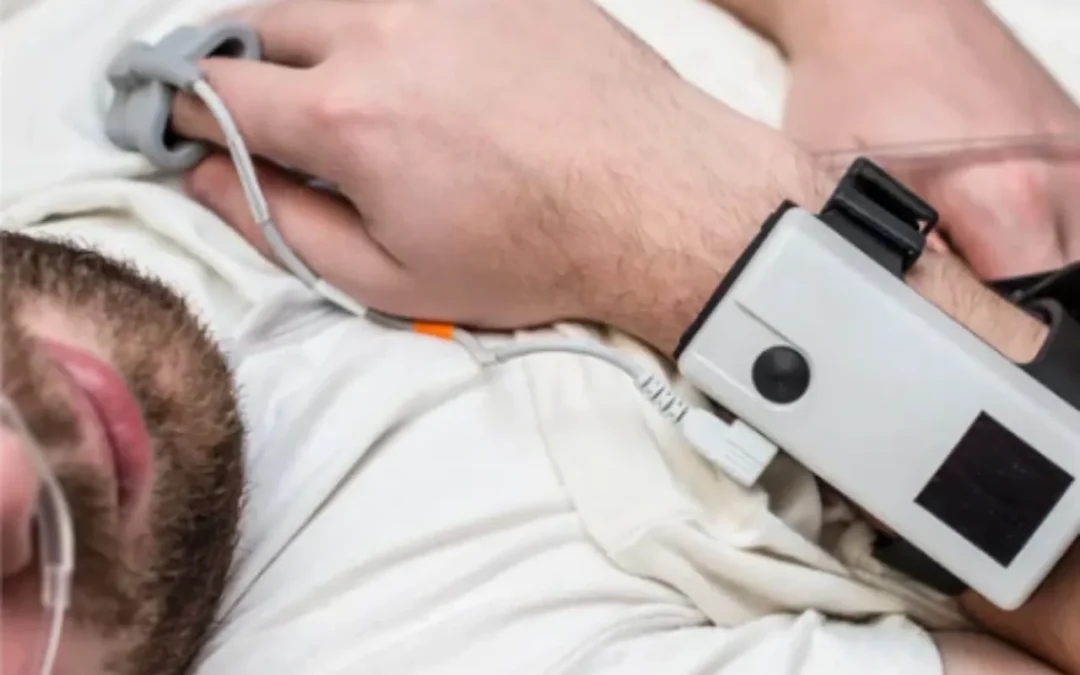
If you’ve been told you snore, wake up gasping, or feel exhausted even after a full night’s rest, your doctor may recommend a sleep study. But not all sleep studies are the same. The two most common options are a home sleep apnea test (HSAT) and an in-lab sleep study (polysomnography or PSG). Understanding the differences can help you know what to expect and which option might be best for you.
What Is a Home Sleep Apnea Test?
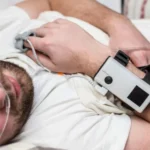
A home sleep apnea test is a simplified study that you complete in the comfort of your own bed. You’ll be given a portable device that measures things like breathing, oxygen levels, heart rate, and snoring.
When it’s useful:
- You have symptoms strongly suggesting obstructive sleep apnea (OSA)
- You don’t have major medical conditions that could complicate results
- Cost-effective as they are usually less expensive than in-lab testing
- Convenience and comfort are priorities (no need to travel or spend the night in a sleep lab)
Limitations:
- It does not capture brain activity, limb movements, or sleep stages
- It cannot diagnose other disorders such as narcolepsy, REM behavior disorder, or periodic limb movements
- It can underestimate severity of sleep apnea in some patients
- A negative or inconclusive result does not mean you do not have sleep apnea
What Is an In-Lab Sleep Study?
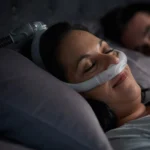
An in-lab sleep study, also called a polysomnogram, is performed overnight at a sleep center. Sensors monitor your brain waves, breathing, heart rhythm, oxygen levels, muscle activity, and body movements.
When it’s useful:
- You have complex medical conditions (such as heart failure, COPD, or chronic opioid use)
- You experience unusual nighttime behaviors like sleepwalking or acting out dreams
- You may have conditions beyond sleep apnea, such as narcolepsy or REM behavior disorder
- Previous home testing was inconclusive
Advantages:
- Provides a detailed picture of your sleep cycles and disorders
- Allows for direct monitoring by sleep technologists
- Often includes initiation of CPAP therapy during the study, if sleep apnea is diagnosed
Which Test Is Right for Me?
Choosing between a home test and an in-lab study depends on your health history, symptoms, and risk factors. A sleep specialist will review your case to determine the most appropriate option.
If your main concern is sleep apnea and you’re otherwise healthy: a home sleep study may be a good first step.
If your symptoms are complex or another disorder is suspected: an in-lab study provides the most thorough evaluation.
The Bottom Line
Both types of sleep studies can be effective tools for diagnosing sleep problems. The key is matching the right test to the right patient. If you’re struggling with poor sleep, daytime fatigue, or disruptive nighttime symptoms, don’t wait, schedule a consultation with Dr. Gomes to see if testing is appropriate for you.
Better sleep often starts with the right diagnosis.
© 2025 Successful Sleep and Wellness. All rights reserved.
(a trade name of Successful Sleep Associates, LLC)